Subscribe!

The Practical
Journal for Church
Leaders
Save 21%

About This Blog


Sites We're Watching


Miscellaneous
Movies
Books
Music
February 19, 2009

A city on a hill should not be worried

money_troubles.jpg
I always do something different after I've spent a little time in the Word each morning. Sometimes I'll read a chapter from a book. Sometimes I'll jot down a few thoughts that have been rolling around in my head - sermon ideas, article ideas, ideas for ingenious inventions to be sold on the Home Shopping Network. Sometimes I'll turn on the computer and skip around the Internet for a while. Last week, after pondering the words of Matthew 6:25?34, I chose that last option. I closed my Bible, fired up my laptop, and poured over CNN.com, USAToday.com, Time.com, and other news-related hot spots. I really only needed to visit one site, because they were all talking about the same thing - the economic crisis. The headlines were endless, exclamatory: Stock markets respond poorly to latest financial news! Vice President says bailout plan only has 30 percent chance of working! Experts claim "no end in sight" for financial woes! The imperative was singular: "Be worried - very worried." The doomsday chorus was almost enough to make me wonder if maybe I should be paying better attention to those Cash4Gold.com commercials. But then I remembered that I don't have any gold objects at home. That and I remembered what I'd read long before Wolf Blitzer started barking in my ear.

Humbled, I once again considered the birds of the air and the lilies of the field. It was a little hard to do in the midst of a Chicago winter, but I was able to use my sanctified imagination.

I reminded myself that Solomon probably did have quite a wardrobe.

I weighed carefully the line of reasoning that says leave tomorrow alone, for today has enough trouble of its own.

All these things were comforting - as warm as those Snuggies they sell on the Home Shopping Network (which I totally could have come up with if I'd been more disciplined about jotting down my ideas in the past). Comfort was what I needed, I suppose. But God didn't stop at comfort. He seemed to think I needed a swift kick of conviction, too.

Here's the section of Matthew 6:25?34 that I felt the Spirit poking me with until it cracked open my heart: "Do not worry then, saying, 'What will we eat?' or 'What will we drink?' or 'What will we wear for clothing?' For the Gentiles eagerly seek all these things; for your heavenly Father knows that you need all these things." And here's the part of that section that was particularly convicting: "For the Gentiles eagerly seek all these things." In all the birds, lilies, and talk of Solomon, I had missed Christ's potent word about living as a "Gentile."

The Greek word (ethnos) that hides behind the English word "Gentiles" is most often translated as "nations." Why the decision by most translations to translate the word as "Gentiles"? Because within the larger New Testament context, this word (ethnos) is often used to identify nations that are set apart from the nation, Israel. Keeping this in mind, you begin to see that Christ is saying something quite significant: among all the nations, Israel ought to stand out as the one that doesn't worry. After all, she carries with her a story that ought to bat away anxiety every time it shows its ugly face. Her rich history speaks of a God who has broken the back of political figureheads, split a sea in two, toppled kingdoms, and started a revolution out of a remnant time and again. As for the story of the Gentiles? Well, they are the ones who have been broken, swallowed up, toppled, and rendered powerless by a nation that looks like a Chihuahua among Great Danes. It's easy to see why Christ offers the imperative "do not worry" at the beginning, middle, and end of the pericope. Israel's narrative demanded that she have a backbone. Hers was a God-filled story - quite the opposite of the Gentiles' godless tale.

Of course, all my reflections on this passage thus far are highly contextualized. As you well know, a great light has now been seen by the Gentiles, and Jews and Gentiles have become one in a grafting together of the nations in Christ. Now all of us believers share the same stunning narrative teeming with God's providence. In turn, this shared narrative means a backbone is demanded of every believer, no excuses.

chicago_stock_exchange.jpg
This is where the conviction really begins to settle in for me, for you, for all of us. Why wouldn't we show a little backbone when the rest of the world has gone the way of the jellyfish? Our great God deserves a little credit. His track record is awfully good - even when his actions have seemed sketchy in the moment, they have proved brilliant in hindsight. But let's go a step further. In these troubled times, perhaps the greatest witness we can offer as the people of God is to refuse to bow at the altar of anxiety. Wouldn't it speak volumes if we didn't tremble like schoolchildren when the market takes another bear-ish turn? Isn't it crucial that we don't embrace the Gentile spirit? While countless others flit around without an anchoring narrative (besides the decidedly American narrative), wouldn't it be nice to stand out as a people who cling to a reassuring story that fuels nothing but confident expectation?

As of late, I've been forcing myself to read every section of the Sermon on the Mount in the cool shadow of how it begins - namely the Beatitudes and the missional call toward being salt and light and a city on a hill. In keeping with that practice, I cannot help but offer this word to you and to those I will preach to in the months ahead: a city on a hill should not be worried, if only for the sake of the other cities keeping an eye on it. If those who have hope lose hope, what witness is there for the hope that is in Christ?

Rudyard Kipling writes, "If you can keep your head when all about you are losing theirs?you'll be a man, my Son." Should the church keep her head when all about her are losing theirs, she'll be much more than Kipling gets at in his poem. She'll be the very witness she's called to be in a trembling world filled with troubled headlines - and who knows how many headless people will suddenly find their souls by way of that witness.

lowery_brian%20copy.jpg
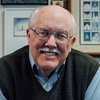
Brian Lowery is managing editor of PreachingToday.com.

Posted by Brian Lowery at 10:42 AM on February 19, 2009

Trackback Pings

TrackBack URL for this entry:
http://blog.christianitytoday.com/mt/mt-tb.cgi/2053


Comments

Nicely put, Brian, and a good reminder. I'm glad you put off your inventions for another day.

Posted by: Steve Campbell on February 19, 2009

That gave me a good laugh, Steve. Thanks for that! And thanks for your continued presence on the blog. I'm really enjoying it.

Posted by: Brian Lowery on February 19, 2009

Amen, Brian! I couldn't agree more.

Posted by: Julia on February 20, 2009

I really enjoyed your blog. You really have a talent for writting. You will be a blessing to someone someday.

Posted by: Geneva on March 31, 2009

Hi Brian,

Good word, well expressed and timely also. Thanks for it. We've been working on this attitude already, but it's fantastic to know that the Lord is saying the same to His people everywhere.

Posted by: Bev Murrill on April 1, 2009

“What is Wrong With Us? It is in the air we breathe. The things we do. The things we say. Our books. Our papers. Our theater. Our movies. Our radio and television. The way we behave. The values we fix....We are, on the average, rich beyond the dreams of kings of old. Yet something is not there that should be – something we once had.” (Lewis Seltzer, Cleveland Press Editor)

Charles Crismier in his book “Renewing the Soul of America” asked, “If Seltzer’s diagnosis was correct in 1952, what would it be today?”

Jeff Greenfield, in Time’s editorial “The Looking Glass” wrote, “It is finally dawning on us that we may have made a Faustian bargain a half-century ago, swapping community and neighborhood and roots for the expectation of material abundance.”

Crismier put the seal to the rumination by citing Time’s cover on April 5, 1993: “The Generation That Forgot God.”

Today, how about this pleading: “Restore us to yourself, O LORD, that we may return; renew our days as of old.” (Lamentations 5:21)?

Posted by: still on April 2, 2009

Post a comment


Remember Me?

(1500 characters max; you may use HTML tags for style)

Verification (needed to reduce spam):


  back to top